
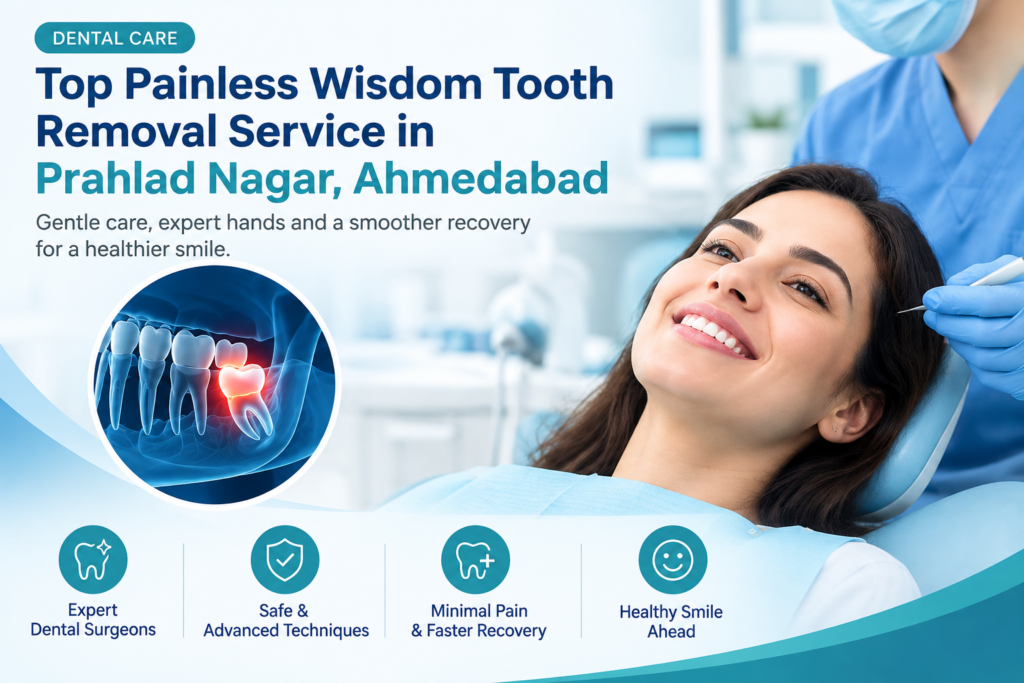
Wisdom teeth are the last set of molars to develop, usually appearing during the late teenage years or early adulthood. While some people have enough space for these teeth to grow normally, others may experience pain, swelling, infection, gum problems, or difficulty opening the mouth. In such situations, a dentist may recommend wisdom tooth removal.
Modern dentistry offers several techniques designed to make tooth extraction more comfortable for patients. With proper examination, anesthesia, advanced imaging, and careful treatment planning, wisdom tooth removal can often be performed with minimal discomfort.
For patients searching for a Painless Wisdom Tooth Removal Service in Prahlad Nagar, understanding the procedure and knowing what to expect can make the experience less stressful.
What Is Wisdom Tooth Removal?
Wisdom tooth removal is a dental procedure used to extract one or more third molars when they are causing problems or are likely to create future complications.
A wisdom tooth may become impacted when it does not have enough space to emerge properly. It can grow at an angle, remain partially covered by gum tissue, or become trapped beneath the gum or bone.
Depending on its position, an impacted wisdom tooth may contribute to:
- Persistent jaw or tooth pain
- Swollen or tender gums
- Repeated infections
- Food becoming trapped around the tooth
- Difficulty cleaning the area
- Tooth decay
- Damage to neighboring teeth
- Cysts or other dental complications in some cases
Not every wisdom tooth needs to be removed. A dentist can evaluate the tooth’s position, symptoms, and potential risks before recommending extraction.
Why Does Wisdom Tooth Removal Hurt?
Many patients worry about pain because wisdom tooth extraction is a surgical dental procedure in some cases. However, local anesthesia is generally used to numb the treatment area during extraction.
You may feel pressure or movement during the procedure, but you should not normally feel sharp pain while the area is adequately anesthetized. Your dentist will monitor your comfort throughout the treatment.
The level of discomfort after the procedure varies depending on factors such as the position of the tooth, whether it is impacted, the complexity of extraction, and individual healing response.
Benefits of Professional Wisdom Tooth Removal
Removing a problematic wisdom tooth can provide several potential benefits.
Relief From Pain
If the wisdom tooth is responsible for recurring pain or pressure, extraction may help address the underlying source of discomfort.
Reduced Risk of Infection
Partially erupted or impacted wisdom teeth can sometimes be difficult to clean. Removing a problematic tooth may reduce the risk of repeated infections in the affected area.
Protection of Nearby Teeth
An incorrectly positioned wisdom tooth can place pressure on neighboring teeth or make cleaning more difficult. In appropriate cases, extraction can help protect surrounding oral structures.
Easier Oral Hygiene
The back of the mouth can be challenging to clean, especially around partially erupted wisdom teeth. Removing a troublesome tooth may make maintaining oral hygiene easier.
How Is Wisdom Tooth Removal Performed?
The treatment begins with a dental examination. Your dentist may recommend an X-ray or other imaging to understand the position of the wisdom tooth and its relationship with surrounding teeth and structures.
Based on the examination, the dentist determines whether a straightforward extraction or a more involved surgical procedure is necessary.
Step 1: Examination and Planning
Your dental team reviews your symptoms, medical history, oral health, and imaging results. This helps determine the safest approach.
Step 2: Local Anesthesia
The treatment area is numbed with local anesthesia. This helps minimize discomfort during the extraction.
Step 3: Tooth Removal
If the tooth has erupted normally, it may be removed using standard extraction techniques. An impacted wisdom tooth may require a small surgical opening and, in some cases, sectioning of the tooth into smaller portions for controlled removal.
Step 4: Post-Treatment Instructions
After extraction, your dentist provides instructions regarding food, oral hygiene, medication, activity, and follow-up care.
Recovery After Wisdom Tooth Extraction
Recovery differs from person to person. Some swelling, tenderness, or mild discomfort may occur during the first few days. Your dentist may recommend appropriate pain management and other aftercare measures based on your individual procedure.
Following the instructions provided by your dental professional is important. Patients are generally advised to avoid disturbing the extraction site and to follow any dietary recommendations during the initial healing period.
Maintaining oral hygiene is also important, but the extraction area should be cared for according to your dentist’s instructions.
If you experience severe or worsening pain, significant swelling, persistent bleeding, fever, or other concerning symptoms, contact your dental professional promptly.
Choosing a Wisdom Tooth Removal Clinic
When searching for a Painless Wisdom Tooth Removal Service in Ahmedabad, patients should look beyond the word “painless” and consider the overall quality of care.
Important factors include the dentist’s experience with wisdom tooth procedures, diagnostic facilities, sterilization standards, anesthesia protocols, treatment planning, emergency support, and post-treatment guidance.
I Smile Dental Care provides dental treatment in Ahmedabad and can evaluate wisdom tooth problems to determine whether extraction is appropriate. A professional consultation allows patients to understand the condition of their wisdom tooth and the recommended treatment approach.
How to Prepare for Wisdom Tooth Removal
Before your appointment, tell your dentist about any medications, allergies, or relevant health conditions. Follow any instructions regarding eating, drinking, or medication that your dental team provides.
It can also be helpful to arrange a comfortable period for recovery, particularly if the extraction is expected to be more complex.
Patients should avoid self-diagnosing wisdom tooth problems based solely on symptoms. Pain at the back of the mouth can have several possible causes, and a professional examination is needed to identify the actual problem.
Conclusion
Wisdom tooth removal does not have to be an intimidating experience. Modern dental techniques, appropriate anesthesia, diagnostic imaging, and careful treatment planning can help make the procedure more comfortable and predictable.
If you are experiencing recurring wisdom tooth pain, swelling, infection, or difficulty cleaning the area, consult a qualified dentist for an evaluation. Early assessment can help determine whether monitoring, treatment, or extraction is appropriate.
For anyone researching a Painless Wisdom Tooth Removal Service in Prahlad Nagar, a personalized consultation is the best way to understand the condition of the wisdom tooth and the available treatment options.
Patients looking for a Painless Wisdom Tooth Removal Service in Ahmedabad should choose a dental clinic that emphasizes proper diagnosis, patient comfort, safety, and appropriate follow-up care.
Frequently Asked Questions
1. Is wisdom tooth removal completely painless?
The procedure is performed using anesthesia to numb the treatment area, so patients generally should not experience sharp pain during extraction. Some pressure or movement may be felt. Mild discomfort can occur after the anesthesia wears off.
2. How long does wisdom tooth removal take?
The duration depends on the tooth’s position and the complexity of the extraction. A straightforward extraction may be relatively quick, while an impacted wisdom tooth can require additional surgical steps.
3. How many days does it take to recover?
Initial discomfort and swelling often improve over several days, but complete healing of the extraction site can take longer. Your dentist can provide a more specific recovery expectation based on your procedure.
4. Do all wisdom teeth need to be removed?
No. Healthy wisdom teeth that have erupted properly and can be kept clean may not require extraction. Removal is generally considered when a tooth is causing problems or presents a significant risk of complications.
5. When should I see a dentist for wisdom tooth pain?
You should arrange a dental examination if you experience persistent pain, swelling, difficulty opening your mouth, recurring gum infections, or other symptoms around a wisdom tooth. Severe swelling, fever, difficulty swallowing, or breathing requires prompt professional attention.