A healthy smile is more than just an attractive feature—it is an important part of your overall well-being. Unfortunately, tooth decay is one of the most common dental problems affecting children, adults, and seniors alike. The good news is that tooth decay often develops gradually, giving you plenty of opportunities to catch it early and prevent serious complications.
Recognizing the early warning signs of tooth decay can help you seek timely treatment, avoid severe pain, and protect your natural teeth. At I Smile Dental Care, we encourage patients to understand these symptoms so they can maintain excellent oral health and avoid costly dental procedures.
What Is Tooth Decay?
Tooth decay occurs when bacteria in the mouth feed on sugars from food and drinks, producing acids that slowly damage the outer layer of the teeth, known as enamel. If left untreated, the decay can spread deeper into the tooth, affecting the dentin and eventually reaching the pulp, where nerves and blood vessels are located.
Early diagnosis makes treatment much simpler and helps preserve the natural tooth structure.
1. White Spots on the Teeth
One of the earliest signs of tooth decay is the appearance of chalky white spots on the tooth surface. These spots indicate that minerals are being lost from the enamel due to acid attacks.
At this stage, tooth decay may still be reversible with good oral hygiene, fluoride treatments, and dietary improvements.
2. Tooth Sensitivity
If you experience discomfort while eating ice cream, drinking hot coffee, or consuming sweet foods, it could be an early warning sign of enamel damage.
Tooth sensitivity develops when the protective enamel begins to wear away, exposing the underlying dentin. Although sensitivity may have several causes, it should never be ignored.
3. Persistent Toothache
A toothache that comes and goes or gradually becomes more frequent is often a sign that decay has progressed.
The pain may initially be mild but can worsen as bacteria move deeper into the tooth. Seeking dental care early can prevent infection and preserve the tooth.
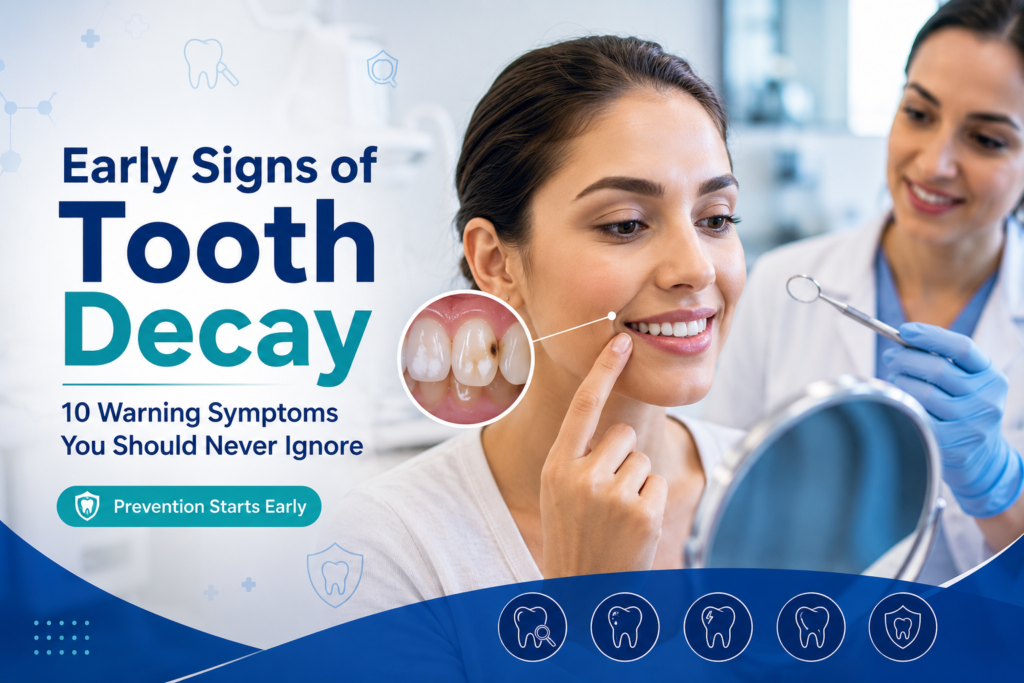
4. Dark Spots or Stains
Brown, black, or grey spots on your teeth are not always harmless stains. They may indicate that decay has already started breaking down the tooth structure.
A professional dental examination can determine whether these marks are superficial stains or active cavities requiring treatment.
5. Small Holes or Pits
As tooth decay progresses, tiny holes or pits may develop on the chewing surfaces or between the teeth.
These cavities can trap food particles and bacteria, allowing decay to spread more rapidly if not treated promptly.
6. Bad Breath That Doesn’t Go Away
Persistent bad breath, even after brushing and using mouthwash, may indicate bacterial buildup caused by tooth decay.
When bacteria multiply inside cavities, they release unpleasant-smelling compounds that contribute to chronic bad breath.
Maintaining regular dental check-ups helps identify the underlying cause before it becomes more serious.
7. Pain While Chewing
If biting or chewing causes discomfort in one specific tooth, it could indicate that decay has weakened the tooth structure.
Pain during chewing may also suggest a developing crack or infection beneath the surface. Ignoring this symptom may lead to more extensive treatment later.
8. Food Frequently Getting Stuck
Do you notice food constantly getting trapped between certain teeth?
This could be due to small cavities forming between the teeth, creating spaces where food easily accumulates. These hidden cavities often go unnoticed until they become larger.
Daily flossing and routine dental examinations are essential for detecting these difficult-to-see areas.
9. Swollen or Irritated Gums Around One Tooth
While swollen gums are often associated with gum disease, they can also occur when tooth decay spreads close to the gum line or reaches the tooth root.
Localized swelling, tenderness, or redness around one tooth should always be evaluated by a dentist as soon as possible.
10. Visible Damage to the Tooth
In advanced stages, tooth decay may cause visible damage such as broken edges, chipped areas, or large cavities.
At this point, simple fillings may no longer be enough, and treatments such as root canal therapy or dental crowns may be necessary to save the tooth.
Common Causes of Tooth Decay
Several everyday habits increase the risk of developing cavities, including:
- Poor brushing and flossing habits
- Frequent consumption of sugary snacks and beverages
- Dry mouth due to reduced saliva production
- Skipping routine dental check-ups
- Plaque and tartar buildup
- Acidic foods and drinks
- Smoking and tobacco use
Making small lifestyle changes can significantly reduce your risk of tooth decay.
How to Prevent Tooth Decay
Preventing cavities is much easier than treating them. Consider these simple oral care habits:
- Brush your teeth twice daily using fluoride toothpaste.
- Floss every day to remove plaque between teeth.
- Limit sugary foods and carbonated drinks.
- Drink plenty of water throughout the day.
- Eat a balanced diet rich in calcium and vitamins.
- Replace your toothbrush every three to four months.
- Schedule regular dental examinations and professional cleanings.
These preventive measures help keep your teeth strong and healthy for years to come.
When Should You Visit a Dentist?
You should schedule a dental appointment if you notice:
- Ongoing tooth sensitivity
- Tooth pain lasting more than a day
- Dark spots on your teeth
- Bad breath that doesn’t improve
- Visible cavities
- Swollen gums around a tooth
- Pain while chewing
Early treatment often requires only a simple filling, while delaying treatment may lead to infections, root canal treatment, or even tooth loss.
Conclusion
Tooth decay rarely develops overnight. It usually begins with subtle warning signs that many people overlook until the problem becomes painful. Paying attention to symptoms such as white spots, sensitivity, toothache, dark stains, and small cavities can help protect your smile and prevent more complicated dental procedures.
Regular dental check-ups remain the best way to detect tooth decay in its earliest stages. At I Smile Dental Care, our experienced dental team focuses on early diagnosis, preventive care, and personalized treatment to help every patient maintain healthy teeth and gums. If you notice any of these warning signs, don’t wait for the pain to worsen. Visit I Smile Dental Care for a comprehensive dental examination and take the first step toward preserving your natural smile for years to come.
provide me same for this How to Prevent Cavities in Children Daily Habits Every Parent Should Follow
How to Prevent Cavities in Children: Daily Habits Every Parent Should Follow
Every parent wants to see their child grow up with a bright, healthy smile. However, cavities remain one of the most common dental problems among children. While baby teeth eventually fall out, they play an essential role in chewing, speech development, and guiding permanent teeth into their proper position. Taking care of your child’s teeth from an early age can help prevent cavities and establish healthy oral habits that last a lifetime.
The good news is that most childhood cavities are preventable with simple daily routines. At I Smile Dental Care, we believe that educating parents is the first step toward protecting children’s oral health. By encouraging healthy habits at home and scheduling regular dental check-ups, parents can significantly reduce the risk of tooth decay.
What Are Cavities?
Cavities are small holes that develop in the teeth when harmful bacteria in the mouth feed on sugars from food and drinks. These bacteria produce acids that gradually wear away the tooth’s protective enamel. Without proper care, cavities can grow larger, causing pain, infection, and even premature tooth loss.
Children are especially vulnerable because they often enjoy sugary snacks, may not brush properly, and are still learning good oral hygiene habits.
Why Baby Teeth Matter
Many parents believe that cavities in baby teeth are not a major concern because these teeth will eventually fall out. However, healthy baby teeth are important because they:
- Help children chew food comfortably.
- Support proper speech development.
- Maintain space for permanent teeth.
- Contribute to healthy jaw growth.
- Build confidence with a beautiful smile.
Untreated cavities can cause pain, difficulty eating, and may even affect the development of permanent teeth.
1. Brush Twice Every Day
Brushing is the foundation of good oral health. Children should brush their teeth twice a day using a fluoride toothpaste suitable for their age.
Parents should supervise brushing until children are able to clean their teeth effectively on their own, usually around the age of seven or eight. Encourage brushing for at least two minutes, ensuring all tooth surfaces are cleaned.
2. Teach Proper Brushing Technique
Simply brushing isn’t enough if it isn’t done correctly.
Teach your child to use gentle circular motions rather than scrubbing aggressively. Make sure they brush the front, back, and chewing surfaces of every tooth, as well as the tongue to reduce bacteria and maintain fresh breath.
3. Floss Every Day
Many cavities develop between teeth where toothbrush bristles cannot reach.
Once your child’s teeth begin touching each other, daily flossing becomes important. Parents may need to assist younger children until they develop the coordination to floss independently.
4. Limit Sugary Snacks and Drinks
Frequent consumption of sweets, chocolates, candies, soft drinks, and sugary juices provides bacteria with the fuel they need to produce harmful acids.
Instead, offer healthier snack options such as:
- Fresh fruits
- Cheese
- Yogurt
- Nuts (for age-appropriate children)
- Raw vegetables
Encouraging water instead of sugary beverages also helps rinse away food particles and bacteria.
5. Encourage Drinking Water
Water is one of the healthiest drinks for children. It helps wash away food debris, keeps the mouth hydrated, and supports natural saliva production.
If your local water supply contains fluoride, it can also strengthen tooth enamel and reduce the risk of cavities.
6. Avoid Sleeping with Milk or Juice Bottles
Putting a child to bed with a bottle of milk, juice, or sweetened drinks can lead to prolonged exposure of the teeth to sugar, increasing the risk of “baby bottle tooth decay.”
If a bedtime bottle is necessary, plain water is the safest choice.
7. Make Dental Visits a Regular Habit
Routine dental check-ups allow dentists to identify small problems before they become serious.
Professional cleanings remove plaque buildup that regular brushing may miss, while early examinations help detect cavities before they cause pain. At I Smile Dental Care, we recommend regular dental visits to monitor your child’s oral development and provide preventive care.
8. Consider Dental Sealants
Dental sealants are thin protective coatings applied to the chewing surfaces of molars. They help prevent food and bacteria from settling into the deep grooves where cavities often begin.
Sealants are a safe and effective preventive option for many school-aged children.
9. Replace Toothbrushes Regularly
Old toothbrushes lose their cleaning effectiveness over time.
Replace your child’s toothbrush every three to four months or sooner if the bristles become frayed. A fresh toothbrush helps maintain proper cleaning and supports good oral hygiene.
10. Set a Good Example
Children often learn by observing their parents.
Brush and floss together as a family, make oral hygiene a fun daily routine, and avoid using sweets as rewards. Positive reinforcement helps children develop lifelong healthy habits.
Early Signs of Cavities in Children
Even with good care, it’s important to watch for early signs of tooth decay, including:
- White or brown spots on teeth
- Tooth sensitivity
- Complaints of tooth pain
- Bad breath that doesn’t improve
- Food getting stuck between teeth
- Visible holes or dark spots
- Difficulty chewing
If you notice any of these symptoms, schedule a dental appointment as soon as possible.
Foods That Support Healthy Teeth
A balanced diet plays a major role in maintaining strong teeth. Include foods rich in calcium, phosphorus, and vitamins, such as:
- Milk and dairy products
- Leafy green vegetables
- Eggs
- Fish
- Apples
- Carrots
- Cucumbers
Crunchy fruits and vegetables also help clean teeth naturally while stimulating saliva production.
When Should Children Have Their First Dental Visit?
Dental experts recommend that children have their first dental visit by their first birthday or within six months after their first tooth appears.
Early dental visits help children become comfortable with the dental environment while allowing dentists to monitor healthy tooth development and provide parents with valuable guidance.
Conclusion
Preventing cavities in children doesn’t require complicated routines—it starts with consistent daily habits. Brushing twice a day, flossing, eating nutritious foods, limiting sugary snacks, drinking plenty of water, and visiting the dentist regularly all contribute to strong, healthy teeth.
By encouraging these habits early, parents can help their children enjoy a lifetime of healthy smiles. At I Smile Dental Care, we are committed to providing gentle, child-friendly dental care and helping families maintain excellent oral health through preventive dentistry. If it’s time for your child’s dental check-up or you have concerns about their oral health, visit I Smile Dental Care for expert guidance and personalized care that keeps little smiles bright and healthy.