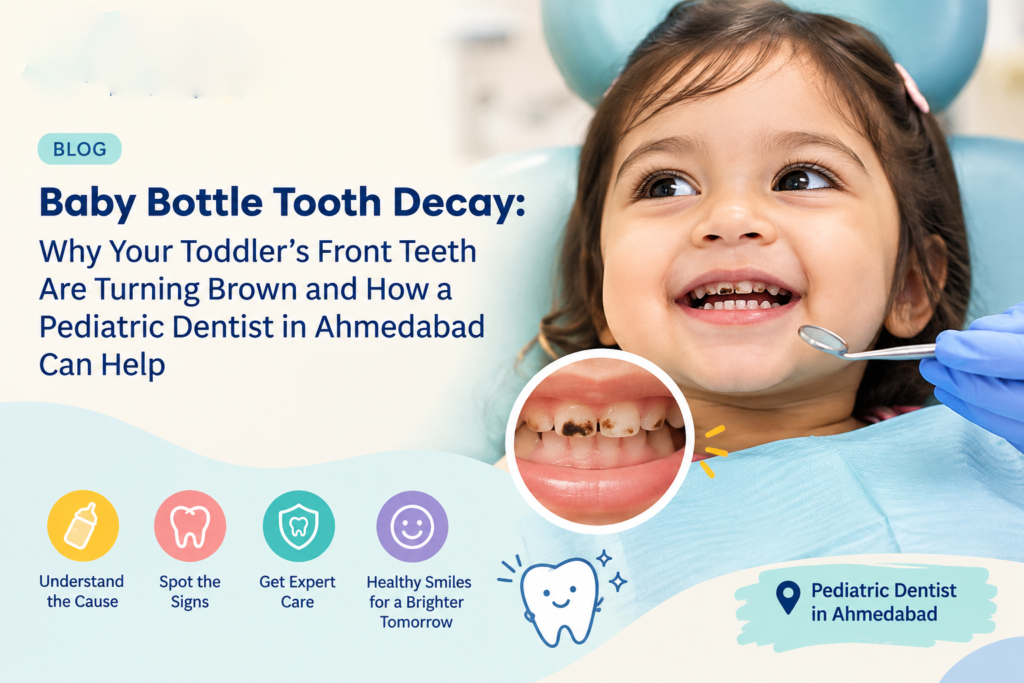
Many parents notice a chalky white line or a brown stain on their toddler’s upper front teeth and assume it will fix itself. Because these are “just baby teeth,” the problem is often ignored until the child is in pain. Baby bottle tooth decay is one of the most common dental problems in young children, and it is also one of the most preventable. If you catch it early, treatment is simple and gentle.
What Is Baby Bottle Tooth Decay?
Baby bottle tooth decay, also called early childhood caries, is tooth damage in infants and toddlers caused by frequent contact between teeth and sugary liquids. The liquids include milk, formula, fruit juice, sweetened water and even honey. Bacteria in the mouth feed on these sugars and produce acid, which gradually dissolves the protective enamel.
Baby teeth have thinner enamel than adult teeth, so decay spreads faster. A small white spot can turn into a brown cavity within a few months.
Why Do the Front Teeth Turn Brown First?
The upper front teeth are usually the first to show damage. When a child falls asleep with a bottle, or feeds at the breast or bottle again and again through the night, milk pools around these teeth. Saliva flow drops during sleep, so the sugar stays on the enamel for hours instead of being washed away.
Common causes include:
- Putting your child to bed with a bottle of milk, formula or juice
- Letting a toddler carry a bottle or sippy cup around and sip all day
- Dipping a pacifier in sugar, honey or syrup
- Frequent sugary snacks and drinks between meals
- Not cleaning the gums and teeth after feeds
- Sharing spoons, which can pass cavity-causing bacteria from adult to child
Early Warning Signs to Watch For
Decay is easiest to treat when you notice it early. Look at your child’s teeth in good light every few weeks, lifting the upper lip to see the front teeth clearly. Signs include:
- Dull, chalky white lines or patches near the gum line
- Light brown, dark brown or black spots
- Small pits or holes in the teeth
- Bad breath that doesn’t go away
- Fussiness while eating, or refusing cold or sweet foods
- Swollen gums or a small pimple-like bump on the gum, which can signal infection
Why Baby Teeth Deserve Serious Care
Some parents believe damaged baby teeth don’t matter because they will fall out anyway. In reality, these teeth hold space for the permanent teeth and help your child chew properly and speak clearly. A badly decayed tooth can cause pain, infection and trouble eating, and it can affect sleep and weight gain.
If a baby tooth is lost too early, neighbouring teeth can drift into the gap, which may lead to crowding later. Infections can also affect the developing permanent tooth underneath. Strong baby teeth set up a healthier smile for life.
How a Pediatric Dentist Can Help
A pediatric dentist is trained to examine and treat very young children, including nervous toddlers. At a clinic like I Smile Dental Care, the visit is designed to be calm and child-friendly, and the dentist explains each step to parents.
Treatment depends on how far the decay has progressed:
- Early stage (white spots): Fluoride varnish and better home care can strengthen enamel and sometimes reverse the damage.
- Mild to moderate cavities: The decayed portion is cleaned and the tooth is restored with a filling. You can read about modern options in our Pediatric Dental Care service.
- Deep decay or infection: A child-sized pulp treatment, similar in principle to the procedure explained in our blog on single-sitting root canal treatment, may be needed to save the tooth, sometimes followed by a protective crown.
- Severely damaged teeth: Extraction may be advised, and the dentist may suggest a space maintainer to protect the gap.
Your child’s age, comfort and the number of teeth affected all shape the treatment plan, so the dentist will talk it through with you first.
How to Prevent Baby Bottle Tooth Decay
Prevention is simple and begins before the first tooth appears:
- Clean the gums: After feeds, wipe your baby’s gums with a clean, soft, damp cloth.
- Start brushing early: When the first tooth erupts, brush twice a day with a soft, child-sized brush and a rice-grain-sized smear of fluoride toothpaste, as your dentist advises.
- Never sleep with a bottle: If your child needs one, offer plain water only.
- Move to a cup: Introduce a regular cup around your child’s first birthday and phase out the bottle gradually.
- Limit sugary drinks: Offer juice rarely, and avoid constant sipping through the day.
- Don’t share saliva: Avoid cleaning a pacifier with your mouth or sharing utensils.
- Schedule regular check-ups: A dentist can spot early changes you might miss.
When Should You See a Dentist?
Don’t wait until a tooth hurts. Book a visit if you spot white or brown marks, or if your toddler is avoiding food or seems uncomfortable. It’s also wise to see a dentist by your child’s first birthday. Our guide to your child’s first dental visit explains when to schedule it and how to keep your child relaxed. And if swelling, severe pain or a knocked tooth ever occurs, our dental emergency guide tells you what to do right away.
Final Thoughts
Brown front teeth in a toddler are a sign to act, not to wait. With good feeding habits, gentle daily cleaning and timely professional care, baby bottle tooth decay can be stopped and often prevented entirely. If you’re worried about your child’s teeth, the team at I Smile Dental Care in Prahlad Nagar, Ahmedabad is ready to help your little one smile with confidence.