Dental emergencies rarely come at a convenient time. A cricket ball to the face, a bite into something hard or a toothache that begins at midnight can leave you worried and unsure what to do. The steps you take in the first few minutes often decide whether a tooth can be saved. This guide explains what counts as an emergency, what to do right away and when to seek professional help.
What Counts as a Dental Emergency?
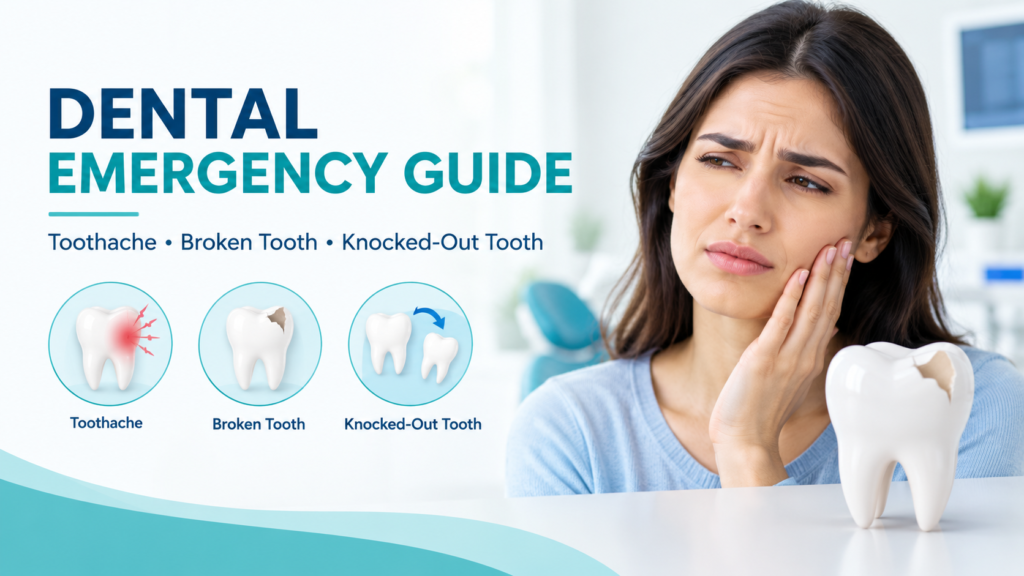
Not every dental problem needs immediate attention, but some situations should never wait. Seek urgent care for severe or throbbing pain, a knocked-out or loosened adult tooth, a badly broken tooth, uncontrolled bleeding, swelling of the face or gums, or an abscess that feels like a painful pimple on the gum. Pain that is severe enough to stop you from eating or sleeping is also a clear signal that you need help.
Severe Toothache
- Rinse your mouth gently with lukewarm water.
- Use dental floss carefully to remove any food trapped between the teeth.
- Apply a cold compress to the outside of your cheek for 15 to 20 minutes.
- Take a standard pain reliever as directed on the label, and never place tablets directly on the gum, because this can burn the tissue.
A toothache is usually a symptom of deep decay or infection, so the pain relief is only temporary. If you have been told about a tooth that may need a root canal, do not ignore a flare-up.
Broken or Chipped Tooth
Rinse your mouth with warm water and save any pieces if you can find them. Apply a cold compress to reduce swelling. If the edge is sharp, you can cover it with sugar-free chewing gum or dental wax to protect your tongue and cheek. Avoid chewing on that side and see a dentist as soon as possible, since a crack can reach the pulp and become an infection later.
Knocked-Out Tooth: Every Minute Counts
A knocked-out permanent tooth is the most time-sensitive emergency. The chances of saving it are highest if it is placed back within about thirty minutes to an hour. Follow these steps:
- Pick the tooth up by the crown, the white chewing part, and never touch the root.
- If it is dirty, rinse it briefly with milk or clean saline. Do not scrub it or remove any attached tissue.
- If possible, gently place it back in the socket and hold it there by biting softly on a clean cloth.
- If you cannot put it back, keep it moist in cold milk or inside your cheek. Do not use plain tap water or wrap it dry in tissue.
- Go straight to a dentist without delay.
Please note that baby teeth should not be pushed back into the socket, but you should still have the child examined.
Lost Filling or Crown
Keep the crown or filling safe and bring it with you. A pharmacy temporary dental cement can hold a crown in place for a short time, but avoid strong glues. Stay away from very hot, cold or hard foods, and book an appointment promptly, because the exposed tooth is vulnerable to decay and fracture.
Swelling or Abscess
Swelling in the face, a fever, a bad taste in the mouth or a bump on the gum can mean a spreading infection. Rinse with warm salt water and see a dentist urgently. If the swelling affects your breathing or swallowing, go to a hospital emergency department immediately.
Pain at the Back of the Mouth
Pain, swelling or a bad taste near the back of your jaw is sometimes caused by a partly erupted wisdom tooth. To learn when this becomes a problem, read our guide on when wisdom tooth removal is necessary.
What You Should Not Do
- Do not ignore pain just because it has stopped, since a sudden end to pain can mean the nerve has died while the infection continues.
- Do not place aspirin or any painkiller directly against the gum.
- Do not try to pull, cut or treat an abscess yourself.
- Do not take leftover antibiotics without a prescription.
Be Prepared Before an Emergency Happens
Keep your dentist’s phone number saved on your phone and a small kit at home with sterile gauze, dental wax, a small container with a lid and a cold pack. Children who play sports should wear a mouthguard, because it prevents many injuries.
If you are ever in doubt, it is better to call than to wait. The team at I Smile Dental Care can advise you on the next step and arrange treatment for urgent problems based on their availability.
Prompt care protects your teeth, your comfort and your wallet. Save the contact details of I Smile Dental Care today, so that if an emergency strikes you already know exactly who to call.