
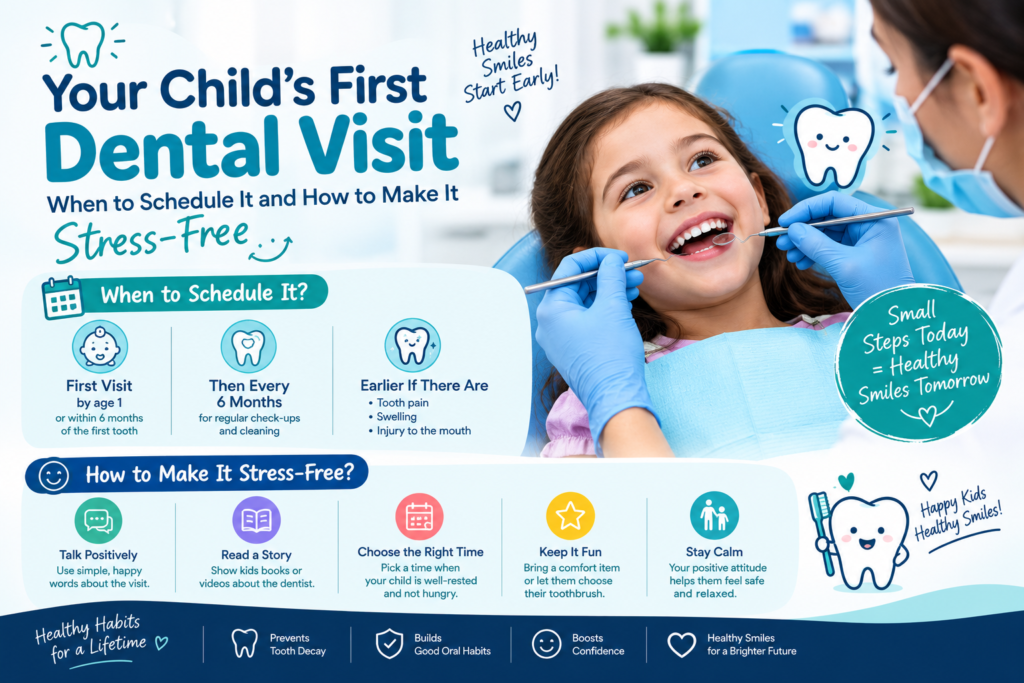
Your child’s first dental visit is an important step in building healthy oral care habits from an early age. Many parents are unsure about the right time to schedule the first appointment and may wait until their child develops a toothache or another visible dental problem. However, an early dental visit can help parents understand how to care for their child’s teeth and allow a dental professional to monitor oral development.
A positive first experience can also help a child become familiar with the dental environment. When dental visits begin as part of regular preventive care, children may gradually feel more comfortable with examinations and oral hygiene routines. Knowing when to schedule the first appointment and how to prepare your child can make the experience easier for both parents and children.
When Should Your Child Have Their First Dental Visit?
It is generally recommended that a child see a dentist by their first birthday or within six months after the first tooth appears. The exact timing can depend on your child’s dental development and individual needs, but parents should not wait for a dental problem to occur before seeking professional advice.
Baby teeth may be temporary, but they play an important role in chewing, speech development, and maintaining space for permanent teeth. Early dental visits provide an opportunity to discuss proper cleaning, feeding habits, fluoride, thumb sucking, pacifier use, and other factors that may affect oral health.
If you notice unusual spots on your child’s teeth, swelling, pain, or an injury to the mouth, arrange a dental appointment rather than waiting for the next routine visit.
Why Is an Early Dental Visit Important?
Young children can develop tooth decay, and early problems may not always be obvious to parents. A dentist can examine the mouth and look for signs that require attention. Early visits also allow parents to receive practical guidance on caring for their child’s teeth at different stages of development.
The first appointment is not only about treatment. It is also an opportunity for prevention and education. Parents can ask questions about brushing techniques, suitable toothpaste, diet, frequent sugary snacks or drinks, and habits that may influence oral development.
Establishing a dental home early may also make it easier to seek professional advice when concerns arise later.
What Happens During Your Child’s First Dental Appointment?
The first visit is usually focused on helping the child become comfortable while the dental professional gathers information and examines the mouth. Depending on the child’s age and cooperation, the dentist may check the teeth, gums, jaw, and general oral development.
The dentist may also ask about your child’s medical history, feeding habits, oral hygiene routine, and any concerns you have noticed. Parents may receive advice about cleaning newly erupted teeth and reducing the risk of early childhood tooth decay.
Some children are comfortable sitting in the dental chair, while very young children may be examined while sitting with a parent. The approach can be adapted to the child’s age and comfort level.
At I Smile Dental Care, parents can discuss their child’s oral health needs with a dental professional and receive guidance on age-appropriate preventive care and daily dental hygiene.
How Can You Prepare Your Child for the First Visit?
Preparation can make a big difference. Try to speak about the dentist in a calm and positive way. Explain that the dentist will look at their teeth and help keep their smile healthy. Use simple words that match your child’s age.
Avoid describing the appointment as something frightening or telling your child that a procedure will not hurt. It is usually better to let the dental team explain things in a child-friendly way if treatment is needed.
You can also play a simple “dentist visit” game at home. Let your child practise opening their mouth while you gently count their teeth. Reading a child-friendly book about visiting the dentist may also help make the idea feel familiar.
Choose the Right Appointment Time
Schedule the visit at a time when your child is usually well-rested and comfortable. For many young children, an appointment earlier in the day can be easier because they may be less tired or irritable.
Try to avoid scheduling the appointment during a usual nap time or when your child is likely to be hungry. A rushed or stressful day can make a new experience more difficult. Arriving a little early can also give your child time to adjust to the surroundings without feeling hurried.
Stay Calm and Positive as a Parent
Children often notice their parents’ reactions. If you appear extremely anxious about the dental visit, your child may become worried too. Try to remain calm and speak positively about the experience.
Avoid using the dentist as a threat, such as saying that the dentist will be upset if your child does not brush their teeth. Instead, explain that brushing and dental visits are normal parts of staying healthy.
Praise your child for cooperating, even if they are nervous. A successful first visit does not always mean that a child sits perfectly still. Simply becoming familiar with the dentist and the clinic environment can be a positive step.
Bring Important Information and Questions
Before the appointment, make a note of any concerns you want to discuss. For example, you may have questions about delayed tooth eruption, thumb sucking, teeth grinding, frequent sweet consumption, brushing difficulties, or changes you have noticed in the mouth.
Be prepared to share relevant information about your child’s medical history, medications, allergies, and previous dental injuries. This helps the dental team understand your child’s individual needs.
It can also be useful to ask the dentist how often your child should return for check-ups. The recommended schedule may vary according to the child’s oral health and risk of dental problems.
How to Build Healthy Dental Habits at Home
Good oral care begins at home. Parents should help or supervise young children with brushing because they may not yet have the coordination to clean their teeth effectively on their own. Use an age-appropriate amount of fluoride toothpaste as recommended by a dental professional and encourage brushing twice daily.
A healthy diet is also important. Frequent exposure to sugary foods and drinks can increase the risk of tooth decay. Water can be a good choice between meals, while regular balanced meals can support overall health.
As children grow, teach them that dental care is a normal daily routine rather than something they only think about when a tooth hurts.
What If Your Child Is Afraid of the Dentist?
Fear of a new environment is common, especially among young children. Do not force your child to understand every detail of the appointment in advance. A gentle introduction and repeated positive experiences can help build confidence over time.
Tell the dental team if your child is particularly anxious, shy, or has had a difficult healthcare experience in the past. They can use an age-appropriate approach and help your child become familiar with each step.
Sometimes a child may need more than one visit before becoming fully comfortable. Patience and consistency can be more helpful than placing pressure on the child to behave perfectly during the first appointment.
I Smile Dental Care can help make preventive dental visits a regular part of your child’s oral healthcare journey. Parents can receive professional guidance on maintaining healthy teeth and helping children develop positive dental habits from an early age.
Final Thoughts
Your child’s first dental visit is an opportunity to begin a healthy relationship with oral care. Scheduling the first appointment early, ideally around the time recommended by dental professionals, can help identify concerns, provide preventive guidance, and familiarise your child with the dental setting.
Keep the experience simple, calm, and positive. Prepare your child with reassuring language, choose a convenient appointment time, and continue supporting good brushing and eating habits at home. Regular dental care and early preventive guidance can help parents support their child’s oral health as their smile continues to grow.