Wisdom teeth are the last set of molars to develop and usually appear at the back of the mouth. They often emerge during the late teenage years or early adulthood. Some people have enough space in their jaws for wisdom teeth to grow normally and remain healthy, while others experience problems because the teeth become trapped, partially erupt, grow at an angle, or affect nearby teeth.
Wisdom tooth removal is not automatically necessary for everyone. A dentist or oral surgeon will examine the teeth and consider factors such as their position, symptoms, surrounding tissues, and potential effect on oral health. Understanding when removal may be recommended and what happens during the procedure can help patients feel more prepared.
What Are Wisdom Teeth?
Wisdom teeth are commonly known as third molars. Most people can develop up to four, with two in the upper jaw and two in the lower jaw. However, the number and development of wisdom teeth vary from person to person.
Because wisdom teeth erupt later than other permanent teeth, there may not always be enough room for them to emerge properly. When space is limited, a wisdom tooth may remain fully or partially impacted within the gum or bone, or it may grow in a position that makes cleaning difficult.
When Is Wisdom Tooth Removal Necessary?
A dentist may recommend removal when a wisdom tooth is causing symptoms or contributing to a dental problem. The decision should be based on an individual clinical assessment rather than the assumption that every wisdom tooth must be removed.
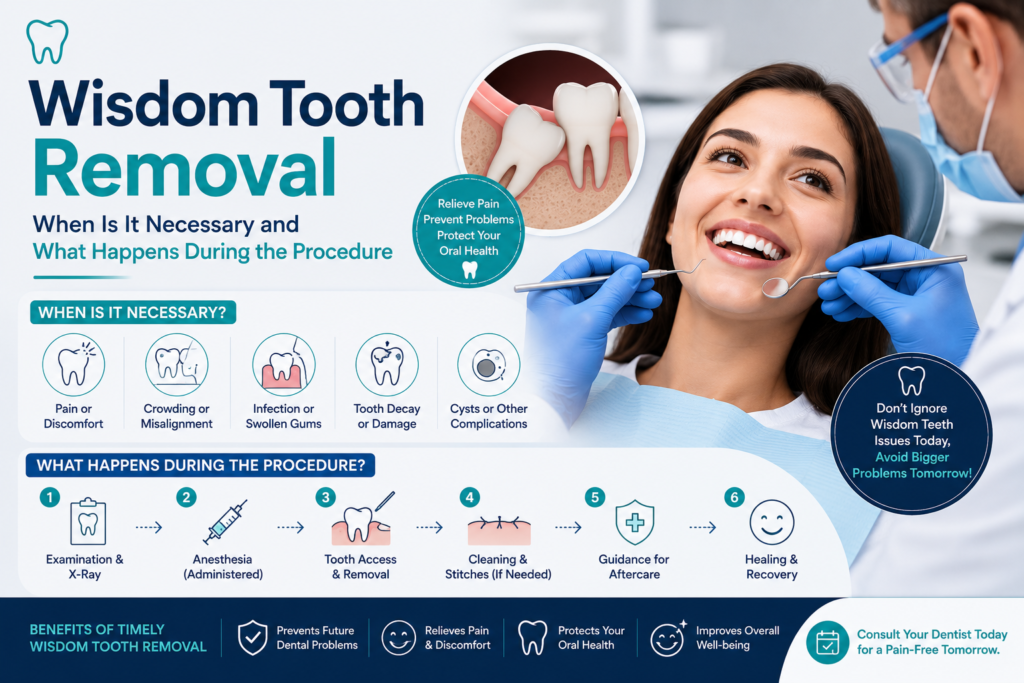
Common reasons a dentist may consider wisdom tooth removal include:
- Repeated pain or discomfort around the back of the mouth
- Recurrent swelling or inflammation of the surrounding gums
- Tooth decay affecting the wisdom tooth or a nearby tooth
- Gum problems in an area that is difficult to clean
- Damage or pressure affecting an adjacent tooth
- A cyst or other abnormal change associated with the tooth
- A wisdom tooth that is significantly impacted or positioned in a way that creates ongoing problems
Regular dental examinations and appropriate X-rays can help the dentist assess the position and condition of wisdom teeth.
Pain and Discomfort at the Back of the Mouth
One of the most common reasons people seek advice about wisdom teeth is pain near the back of the jaw. The discomfort may occur when the tooth begins to erupt, when food and bacteria become trapped around a partially erupted tooth, or because of another dental issue in the same area.
Not all pain near the wisdom tooth means removal is necessary. A dentist should examine the area to identify the cause. Depending on the findings, treatment may involve improved cleaning, management of an infection or inflammation, restoration of the tooth, monitoring, or removal.
Repeated Gum Swelling or Infection
When a wisdom tooth only partially emerges, a flap of gum tissue can remain over part of the tooth. Food debris and bacteria may collect beneath this tissue, making the area difficult to keep clean. This can lead to repeated inflammation, tenderness, swelling, or infection.
If these problems occur repeatedly, the dentist may discuss whether removing the wisdom tooth is the most suitable long-term option. Early evaluation is important, particularly if swelling becomes severe or symptoms continue to return.
Impacted or Poorly Positioned Wisdom Teeth
An impacted wisdom tooth does not erupt normally into its expected position. It may remain partly or completely covered by gum tissue or bone. Some impacted wisdom teeth remain symptom-free and may simply be monitored, while others can create problems that require treatment.
The direction and depth of the tooth are important. A wisdom tooth may lean toward a neighbouring tooth, grow away from it, remain almost horizontal, or sit vertically without enough space to erupt. Dental imaging can help the dentist understand the tooth’s position and plan treatment when necessary.
At I Smile Dental Care, patients can receive an assessment of their wisdom teeth, including an evaluation of symptoms, tooth position, and suitable treatment options based on their individual dental needs.
What Happens Before Wisdom Tooth Removal?
Before recommending removal, the dentist will usually examine your mouth and review your dental history. X-rays or other imaging may be used when clinically appropriate to understand the position of the wisdom tooth and its relationship with surrounding structures.
The dental professional will explain why removal is being considered, the expected procedure, possible risks, and the type of anaesthesia or sedation that may be appropriate. The complexity of the procedure can vary significantly depending on whether the tooth has fully erupted or is impacted.
Patients should inform the dental team about their medical history, medications, allergies, and any previous problems with anaesthesia or dental procedures.
What Happens During the Procedure?
The procedure begins with appropriate anaesthesia to help control pain. Depending on the complexity of the case and the treatment setting, different options may be discussed by the dental professional.
If the wisdom tooth has fully erupted and can be accessed easily, removal may be relatively straightforward. For an impacted tooth, the dentist or oral surgeon may need to make a small incision in the gum and, in some cases, remove a small amount of bone around the tooth. The tooth may also be divided into smaller sections to allow safer removal.
After the tooth is removed, the area is cleaned. Stitches may be used in some cases. The exact duration of the procedure varies according to the position and complexity of the tooth.
What Should You Expect After Wisdom Tooth Removal?
Some discomfort, swelling, and minor bleeding can occur after a tooth extraction. Your dentist will provide specific aftercare instructions based on the procedure performed. Following these instructions carefully is important for proper healing.
Patients may be advised to rest after the procedure, use prescribed or recommended medication as directed, and follow instructions about eating and drinking. Soft foods may be easier to manage initially, and the extraction area should be protected while it heals.
It is important to avoid disturbing the blood clot that forms in the extraction site. Your dental professional may advise against certain activities, such as vigorous rinsing or using a straw, during the early healing period.
How Long Does Recovery Take?
Recovery can vary depending on the complexity of the extraction, the number of teeth removed, and individual healing. Some people feel significantly better within a few days, while complete healing of the extraction area takes longer.
Swelling and discomfort usually improve gradually. If pain becomes worse rather than better, bleeding continues excessively, or you develop concerning symptoms, contact your dental professional promptly.
Good oral hygiene remains important during recovery, but the extraction area should be cared for according to the instructions provided by the dentist.
Possible Risks and Complications
Like other surgical or dental procedures, wisdom tooth removal can involve risks. These may include pain, swelling, bleeding, infection, delayed healing, or a dry socket. Depending on the position of the tooth, there can also be other risks involving nearby teeth, nerves, or the sinus area.
The likelihood and type of risk vary from case to case. Your dentist or oral surgeon should explain the relevant risks before treatment and answer any questions you may have.
Seek prompt professional advice if you experience severe or worsening pain, increasing swelling, fever, persistent heavy bleeding, difficulty breathing or swallowing, or other concerning symptoms after the procedure.
Do All Wisdom Teeth Need to Be Removed?
No. Wisdom teeth that are healthy, fully erupted, positioned correctly, and easy to clean may not need to be removed. They can be monitored during routine dental examinations.
Removal is generally considered when there is an existing problem or a clear dental reason to intervene. The decision should be made after a proper examination and discussion with a qualified dental professional.
I Smile Dental Carecan help patients understand the condition of their wisdom teeth and discuss whether monitoring or removal may be appropriate. A personalised assessment allows the dental team to explain the expected procedure and provide guidance for before and after treatment.
Final Thoughts
Wisdom tooth removal may be recommended when a tooth is causing pain, repeated inflammation, decay, damage to nearby teeth, or other dental problems. However, not every wisdom tooth requires extraction. The best approach is to have the teeth evaluated and follow the advice of a qualified dental professional.
If you are experiencing pain, swelling, or discomfort around the back of your mouth, do not ignore it. A dental examination can identify the cause and help determine whether wisdom tooth removal or another treatment is needed. With appropriate planning, professional care, and aftercare, the procedure can be managed safely according to your individual dental needs.