A smile is an important part of how we express ourselves. If you feel uncomfortable because of stained, chipped, uneven, crowded, or misshapen teeth, smile design can offer a personalised approach to improving your smile. Rather than being one specific dental procedure, smile design involves planning one or more cosmetic or restorative treatments according to your dental condition, facial features, expectations, and overall smile appearance.
Modern smile design can involve treatments such as teeth whitening, dental bonding, veneers, orthodontic treatment, crowns, gum contouring, or other procedures depending on individual needs. The objective is not simply to create extremely white teeth, but to achieve a balanced and natural-looking result that complements your face while maintaining appropriate dental function.
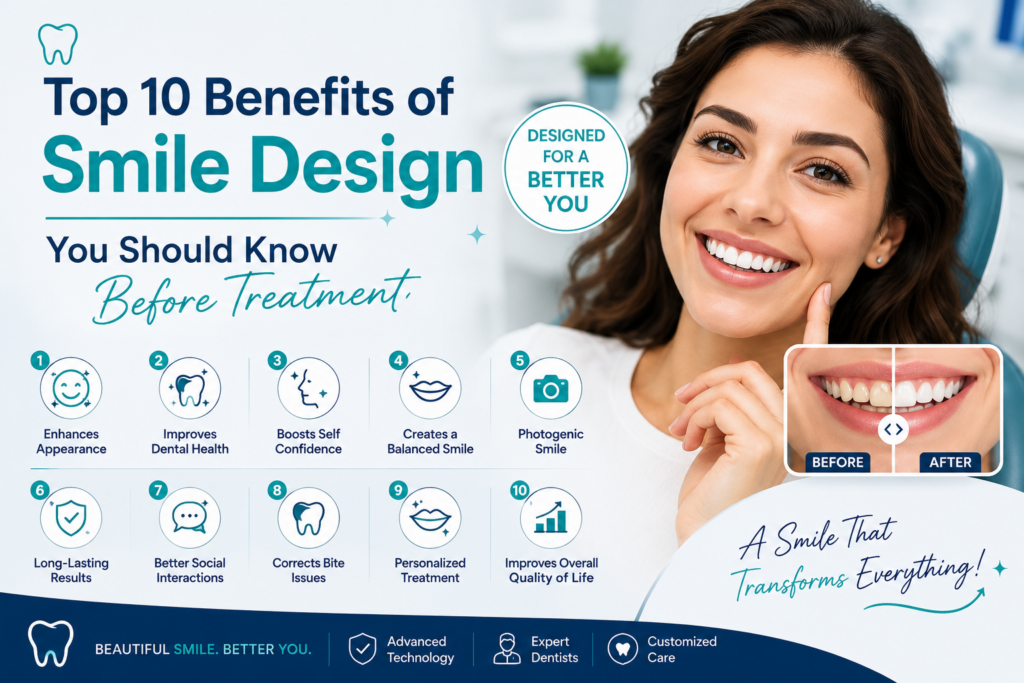
Here are the top 10 benefits of smile design you should know before considering treatment.
1. Creates a More Balanced Smile
One of the main benefits of smile design is the ability to improve the overall balance of your smile. Tooth size, shape, colour, alignment, gum visibility, and facial proportions can all influence how a smile looks.
A personalised treatment plan can address several of these factors together rather than focusing on only one tooth. This can help create a smile that looks more harmonious with your natural facial features.
2. Improves the Appearance of Teeth
Smile design can address several common cosmetic concerns, including discolouration, small chips, uneven tooth shapes, gaps, worn teeth, and certain alignment concerns. Depending on the condition of your teeth, your dentist may recommend one or a combination of cosmetic treatments.
The important point is that treatment should be selected according to your individual dental needs rather than following a standard smile template.
3. Can Increase Confidence
Feeling uncomfortable about your teeth can sometimes make people smile less freely in photographs, conversations, meetings, or social situations. Improving concerns that make you self-conscious may help you feel more comfortable showing your smile.
A smile makeover is often associated with improvements in confidence and self-esteem, although the psychological impact naturally varies from person to person.
4. Provides a Personalised Treatment Plan
Every person’s teeth, gums, facial structure, bite, and expectations are different. Smile design allows the dentist to create a treatment approach around these individual factors.
During an assessment, the dentist may evaluate tooth proportions, gum health, bite, facial characteristics, and the patient’s desired outcome. This personalised planning can help determine which treatments are appropriate and which may not be necessary.
5. Can Address Multiple Cosmetic Concerns
Another advantage is that smile design can bring different cosmetic concerns into one overall treatment plan. For example, someone may have stained teeth combined with small gaps and uneven tooth shapes.
Instead of treating each concern independently without considering the overall appearance, a dentist can develop a coordinated plan. Depending on the case, this could involve whitening, bonding, veneers, aligners, or other treatments.
6. Supports a Natural-Looking Result
A good smile design does not necessarily mean making every tooth look identical or extremely white. Modern cosmetic dentistry can focus on proportions, symmetry, tooth shape, gum display, and facial harmony to create a result that looks appropriate for the individual.
Digital planning can also help dentists assess the relationship between the teeth, lips, gums, and facial features before treatment.
7. May Improve Dental Function in Suitable Cases
Although smile design is commonly associated with appearance, some treatment plans can also address functional concerns. Depending on the patient’s needs, correcting certain alignment or restorative issues may contribute to improved biting, chewing, or overall dental function.
However, cosmetic treatment should not be considered a substitute for comprehensive dental care. A proper examination is important to identify problems such as tooth decay, gum disease, infection, damaged teeth, or bite issues before cosmetic treatment begins.
8. Modern Technology Can Improve Treatment Planning
Digital technology has become an important part of contemporary smile planning. Photographs, digital scans, videos, and computer-based planning may be used to assess the proposed appearance of a patient’s smile.
In some cases, digital smile design can provide a visual representation of the proposed changes before treatment. This can help patients and dentists discuss expectations and make decisions more clearly. However, digital previews are planning tools and cannot guarantee the exact final result.
9. Can Combine Cosmetic and Restorative Dentistry
Smile design is not limited to purely cosmetic procedures. Depending on the patient’s condition, a comprehensive plan may combine cosmetic and restorative dentistry.
For example, a damaged or weakened tooth may require a restoration that also improves its appearance. Similarly, missing teeth may require replacement while the overall smile is being planned. This combined approach can help address appearance, comfort, function, and long-term dental needs together.
10. Can Help You Plan Your Smile Before Treatment
Perhaps one of the biggest advantages of a well-planned smile design is that it gives you an opportunity to understand your treatment options before committing to procedures.
At I Smile Dental Care, the consultation process can help patients discuss their concerns, expectations, and possible treatment options with a dental professional. The dentist can assess the condition of the teeth and gums and determine whether smile design is appropriate for the individual.
It is important to remember that not everyone needs the same treatment. Some people may benefit from a simple whitening procedure or bonding, while others may require orthodontic, restorative, or more comprehensive cosmetic treatment.
Things to Consider Before Smile Design
While smile design can provide several benefits, it is important to approach treatment realistically. Your dentist should first check your oral health and address active problems such as cavities, gum disease, infections, or damaged teeth before beginning elective cosmetic procedures.
You should also ask about the expected results, treatment alternatives, maintenance requirements, costs, and whether a proposed procedure involves permanent changes to your natural teeth. Some treatments, including veneers and crowns, may involve irreversible tooth preparation, so understanding the options beforehand is important.
Is Smile Design Right for You?
Smile design may be worth discussing with a dentist if you are concerned about stained, chipped, uneven, worn, crowded, or misshapen teeth, gaps, or an uneven gum line. The right approach depends on your oral health, bite, tooth structure, aesthetic goals, and overall expectations.
A professional consultation is the best way to determine whether you are a suitable candidate and which treatment options may be appropriate.
I Smile Dental Careprovides patients with an opportunity to discuss their smile concerns and explore personalised cosmetic dental solutions. A carefully planned approach can focus not only on improving appearance but also on maintaining appropriate oral health and function.
Ultimately, the goal of smile design should not simply be a “perfect” smile. It should be a healthy, comfortable, balanced, and natural-looking smile that suits you. With proper assessment, realistic expectations, suitable treatment selection, and regular dental care, smile design can be an effective way to address multiple smile concerns while supporting long-term dental health.