Oral health plays a crucial role in overall well-being, yet many people tend to ignore early dental symptoms until they become serious problems. While some dental issues may seem minor at first, delaying treatment can lead to severe pain, infections, tooth loss, and costly procedures. Recognizing warning signs early and seeking professional care promptly can help prevent complications and maintain a healthy smile.
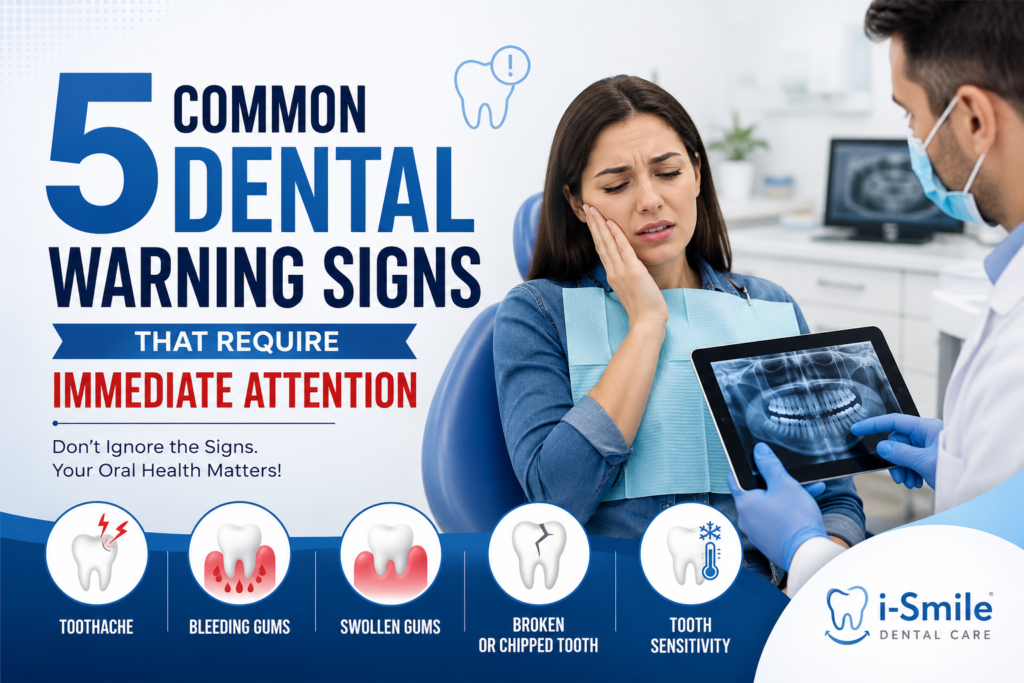
Understanding the symptoms that should never be ignored is essential for protecting your teeth and gums. Here are five common dental warning signs that require immediate attention and why timely treatment matters.
Why Early Dental Care Is Important
Many dental problems develop gradually and may not cause significant discomfort during their early stages. However, oral health issues rarely resolve on their own. What begins as a small cavity or mild gum irritation can quickly progress into a more serious condition if left untreated.
Regular dental checkups and prompt attention to warning signs can help identify problems before they become emergencies. Early intervention often results in simpler, less invasive, and more affordable treatments.
1. Persistent Toothache
A toothache is one of the most common signs that something is wrong with your oral health. While occasional sensitivity may not always indicate a serious issue, persistent or severe tooth pain should never be ignored.
Possible Causes
- Tooth decay
- Dental infection
- Cracked tooth
- Abscess
- Damaged dental filling
- Gum disease
Signs That Require Immediate Attention
- Continuous throbbing pain
- Pain that worsens over time
- Swelling around the affected tooth
- Difficulty chewing
- Pain accompanied by fever
A persistent toothache often signals an underlying problem that requires professional diagnosis and treatment.
2. Bleeding or Swollen Gums
Healthy gums generally do not bleed during brushing or flossing. If you notice bleeding, redness, tenderness, or swelling, it may be a sign of gum disease or another oral health issue.
Possible Causes
- Gingivitis
- Periodontal disease
- Poor oral hygiene
- Vitamin deficiencies
- Certain medical conditions
Why It Matters
Untreated gum disease can damage the supporting structures around the teeth, eventually leading to tooth mobility and tooth loss. Early treatment can often reverse mild gum problems before they progress to more advanced stages.
Prevention Tips
- Brush twice daily.
- Floss regularly.
- Maintain routine dental visits.
- Follow proper oral hygiene practices.
Prompt evaluation can help determine the cause and prevent further complications.
3. Persistent Bad Breath
Everyone experiences bad breath occasionally, especially after consuming certain foods. However, chronic bad breath that does not improve with brushing, flossing, or mouthwash may indicate an underlying dental issue.
Common Causes
- Gum disease
- Tooth decay
- Oral infections
- Poor oral hygiene
- Dry mouth
- Food particles trapped between teeth
When to Seek Help
If bad breath persists for several days or weeks despite maintaining good oral hygiene, a dental examination is recommended. Persistent bad breath may be one of the earliest signs of infection or gum disease.
Addressing the root cause not only improves oral health but also boosts confidence in social and professional interactions.
4. Loose or Shifting Teeth
Adult teeth should remain stable and firmly anchored in the jaw. If you notice a tooth becoming loose or shifting position unexpectedly, immediate dental attention is necessary.
Potential Causes
- Advanced gum disease
- Bone loss
- Dental trauma
- Teeth grinding
- Severe infection
Warning Signs
- Tooth movement when chewing
- Changes in bite alignment
- Gaps developing between teeth
- Gum recession around affected teeth
Loose teeth often indicate damage to the structures supporting the teeth and should be evaluated as soon as possible to prevent tooth loss.
5. Swelling in the Mouth or Face
Swelling involving the gums, jaw, cheeks, or face is a significant warning sign that should never be ignored. In many cases, swelling is associated with infection and may require urgent treatment.
Common Causes
- Dental abscess
- Severe gum infection
- Impacted tooth
- Injury or trauma
- Advanced tooth decay
Signs of a Dental Emergency
- Facial swelling
- Difficulty swallowing
- Difficulty breathing
- Severe pain
- Fever accompanying swelling
Dental infections can spread beyond the mouth if left untreated. Seeking immediate professional care is essential to prevent serious health complications.
Additional Symptoms That Should Not Be Ignored
While the five warning signs above are among the most common, several other symptoms also deserve prompt attention:
- Sudden tooth sensitivity
- Cracked or broken teeth
- Persistent mouth sores
- Pus around the gums
- Difficulty opening the mouth
- Jaw pain or clicking
These symptoms may indicate underlying conditions that require professional evaluation and treatment.
How to Reduce Your Risk of Dental Emergencies
Many dental emergencies can be prevented through consistent oral care and routine dental visits.
Healthy Habits Include:
- Brushing twice daily with fluoride toothpaste
- Flossing every day
- Limiting sugary foods and beverages
- Drinking plenty of water
- Avoiding tobacco products
- Wearing a mouthguard during sports activities
- Scheduling regular dental checkups
Preventive care remains one of the most effective ways to maintain strong teeth and healthy gums.
The Importance of Regular Dental Checkups
Regular dental examinations help detect potential problems before symptoms become severe. Professional cleanings remove plaque and tartar buildup that cannot be eliminated through brushing alone.
At I Smile Dental Care, patients receive comprehensive dental evaluations designed to identify oral health concerns at their earliest stages. Preventive care and timely treatment can significantly reduce the risk of dental emergencies and long-term complications.
Conclusion
Ignoring dental warning signs can lead to more serious oral health problems and costly treatments in the future. Persistent toothaches, bleeding gums, chronic bad breath, loose teeth, and swelling in the mouth or face are important symptoms that require immediate professional attention.
Recognizing these signs early and seeking prompt dental care can help preserve your oral health and prevent complications. Regular checkups, good oral hygiene habits, and timely intervention are essential for maintaining a healthy smile.
For expert diagnosis, preventive care, and personalized treatment solutions, I Smile Dental Careprovides comprehensive dental services focused on helping patients maintain strong, healthy teeth and gums for life.